
January 9, 2007. Steve Jobs walks onto a stage in San Francisco.
He tells the audience he’s going to introduce three revolutionary products.
“The first one is a widescreen iPod with touch controls.” The crowd cheers. “The second is a revolutionary mobile phone.” The crowd goes wild. “And the third is a breakthrough Internet communications device.” More cheering.
Then, Jobs drops the hammer. He repeats the list.
“An iPod, a phone, and an Internet communicator. An iPod, a phone… are you getting it? These are not three separate devices, this is one device. And we are calling it iPhone.”
The place erupted.
Jobs was a master presenter, and his secret weapon was often the oldest trick in the rhetoric book: The Rule of Three.
You don’t need to be launching the next billion-dollar tech product to use it. Whether you are giving your Ice Breaker or a technical briefing, the Rule of Three is the quickest “life hack” to make your message stick.
Why Your Brain Loves the Number Three
Our brains are lazy pattern-recognition machines. We are constantly trying to process data with the least amount of effort possible.
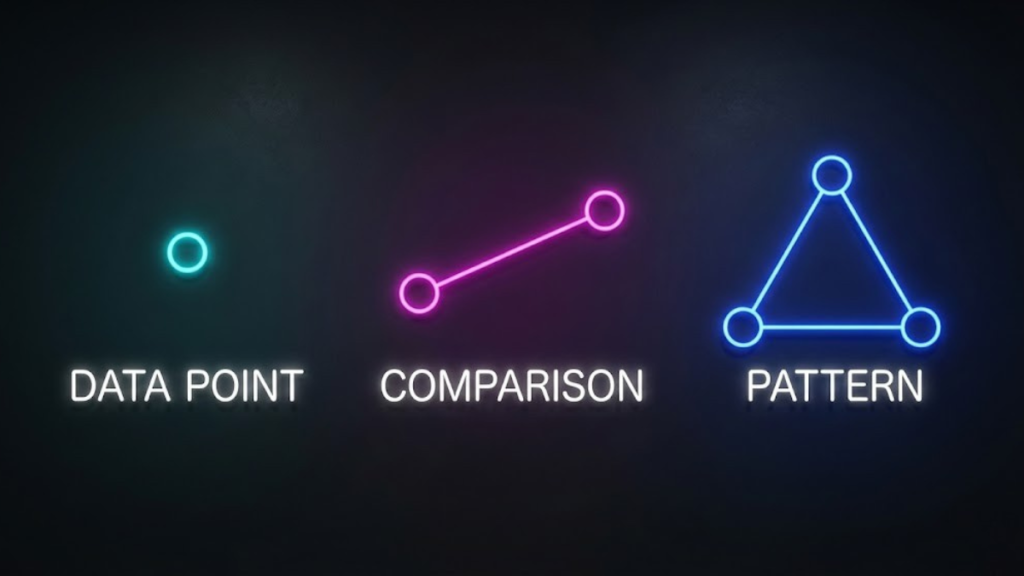
One item is a single data point. It’s lonely. Two items create a comparison or a contrast. It’s binary. But three items? Three establishes a pattern.
It is the minimum number required to create a sequence that feels complete, satisfying, and rhythmic. Think about it:
- “Blood, sweat, and tears.”
- “Life, liberty, and the pursuit of happiness.”
- “Stop, drop, and roll.”
If you list five or six things in your speech, your audience’s cognitive load maxes out. They will zone out and forget them all.
Give them three, and they will remember them forever.
How Steve Jobs Weaponized It
Jobs didn’t just list three things at the iPhone launch. He used the Rule of Three to create narrative tension.
By presenting them as three separate, distinct breakthroughs first, he set a baseline. The audience accepted the premise that Apple had been busy creating three new hardware products.
When he revealed that the “three” were actually “one,” the impact was exponential. It felt like magic because he subverted the pattern he had just established.
According to communication experts who have analyzed Jobs’ style, this structured simplicity was key to his “reality distortion field.” He made complex technology feel intuitive by grouping it into digestible triads.
Applying the Rule to Your Next Speech
You don’t need a black turtleneck to pull this off. Here is how to apply the Rule of Three to your next club speech or presentation.
1. The Macro Structure
The classic speech structure is already a Rule of Three:
- Introduction (Tell them what you’re going to tell them).
- Body (Tell them).
- Conclusion (Tell them what you told them).
If your speech feels wandering or disconnected, check your macro structure. Do you have these three distinct pillars?
2. The Supporting Points
In the body of your speech, limit yourself to three main arguments or examples.
If you are giving a speech on “Why You Should Learn to Code,” don’t give ten reasons. Pick your best three:
- It improves problem-solving.
- It increases career opportunities.
- It allows you to build cool stuff.
If you have a fourth point, cut it. If it’s important enough, merge it into one of the big three.
💡 Pro Tip: Time Your Triads
The power of the Rule of Three isn’t just in the words; it’s in the delivery. You need to let each of the three points breathe.
Don’t rush through your list: “We need point A, point B, and point C.”
Instead, use pauses: “We need point A. [Pause]. We need point B. [Pause]. And finally, we need point C.”
3. The Comedy Variant
Want to get a laugh? The Rule of Three is essential for comedy.
The formula is: Establish, Reinforce, Disrupt.
You use the first two items to set up a serious, expected pattern. The third item breaks the pattern with something absurd.
- Example: “To prepare for this speech, I did extensive research, interviewed three experts, and… ate half a pizza while crying in my car.”
The laugh comes from the surprise of the third item breaking the rhythm of the first two.
Keep It Simple
Modern audiences are distracted. They don’t want a data dump; they want clarity.
The next time you are outlining a speech, channel your inner Steve Jobs. Look at your points and start cutting until you get to the magic number.
Count to three. Stop there. Your audience will thank you for it.
Ready to practice your delivery rhythm?
Don’t just read your list of three; perform it. Use our tool to time your pauses between points for maximum impact.
Launch the Unofficial Speech Timer
Disclaimer: This guide is a personal resource created by Jel Salamanca. It is not an official publication of, nor is it affiliated with or endorsed by, Toastmasters International. Steve Jobs and iPhone are registered trademarks of Apple Inc.